Dispatch 15
This week I have some dirt for you.
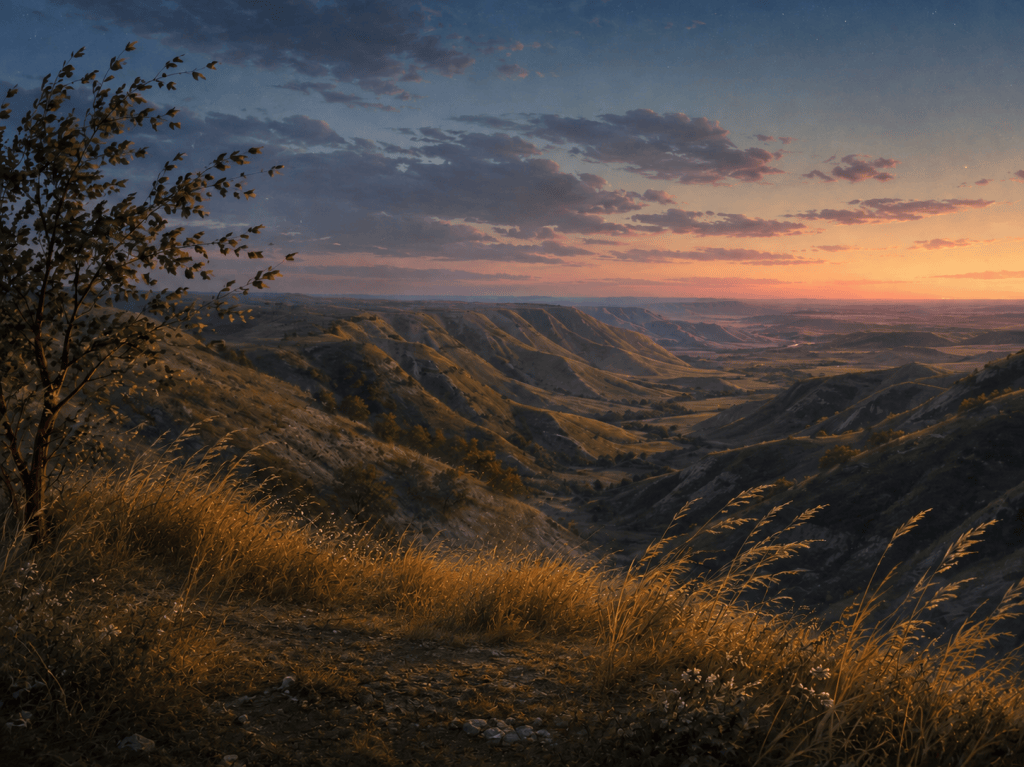
Tonight I’m sitting on a wind hill. Well, no, not really. But I am sitting on a hill made by the wind.
I’ve seen giant sand dunes where there was no ocean in sight. That’s not where I am tonight but hang on, we’ll get there.
These sand dunes were in the mountains. It seems that their formation was the result of erosion, water and wind. I’ve been told that nearby mountains eroded and the sediment was carried by streams into a valley. The sediment, once dried out, was carried by the wind to the neighboring mountains. It would have kept right on going too if it weren’t for winds coming the other way through the mountain passes. Those opposing winds helped the sand pile up. And then there were sand dunes.
Hundreds of miles away, where I am tonight, a similar story took place. Wind, water and erosion shaped this landscape. But not quite in the same way.
Further north of here the land was covered in glaciers during the last ice age. As those glaciers moved, they ground the earth beneath them into fine particles. When the ice melted, meltwater carried those particles away. The particles are so fine that some people even call them glacial flour.
The Missouri River picked up those particles and delivered them downstream. Here. Seasonal cycles of flooding left the deposits on the floodplains near the river. When the water receded, the land dried out. That’s when the wind literally picked up the story.
The wind blew the sediment eastward, depositing it along its path. The wind even did a little sorting along the way. The larger, less aerodynamic particles dropped out first. Smaller particles stayed airborne longer and traveled farther east. Closer to the river, the loess piled up 150 to 200 feet thick in places.
In Colorado, we used to joke that Arizona and New Mexico were moving in when the spring winds came in, heavy with dust. I wonder if that’s how this process worked?
That seems, to me, like quite a journey already but that’s not the end of the story. Water wasn’t done with this landscape. Rain, snowmelt and streams shaped the deposited sediments. They cut ravines and gullies into the hills and gravity caused slumping in places.
Over time, easily eroded materials have been removed. But the landscape is still being reworked by the power of water. Surface water still moves sediments and it appears that even groundwater and the hooves of grazing animals have left their marks. Plant roots and minerals have left their marks under the ground as well.
And, what I find really cool, is that someone paying attention can find evidence of past glaciation. Some of the loess has eroded enough that very ancient glacial deposits are visible here and there. Rumor has it there is also volcanic ash more than 600,000 years old buried beneath the loess, traced all the way back to an ancient eruption in the Yellowstone region.
Staring into the campfire tonight, I have yet to see exposed glacial till or buried volcanic ash. I am just sitting here watching the coals… and feeling a new appreciation for the breeze blowing in the nearby trees.
Oh, and in case you were wondering, loess is just fine, windblown silt.
There. Now you know.
New to Barn Owl?
 Barn Owl Exploration