Dispatch 12
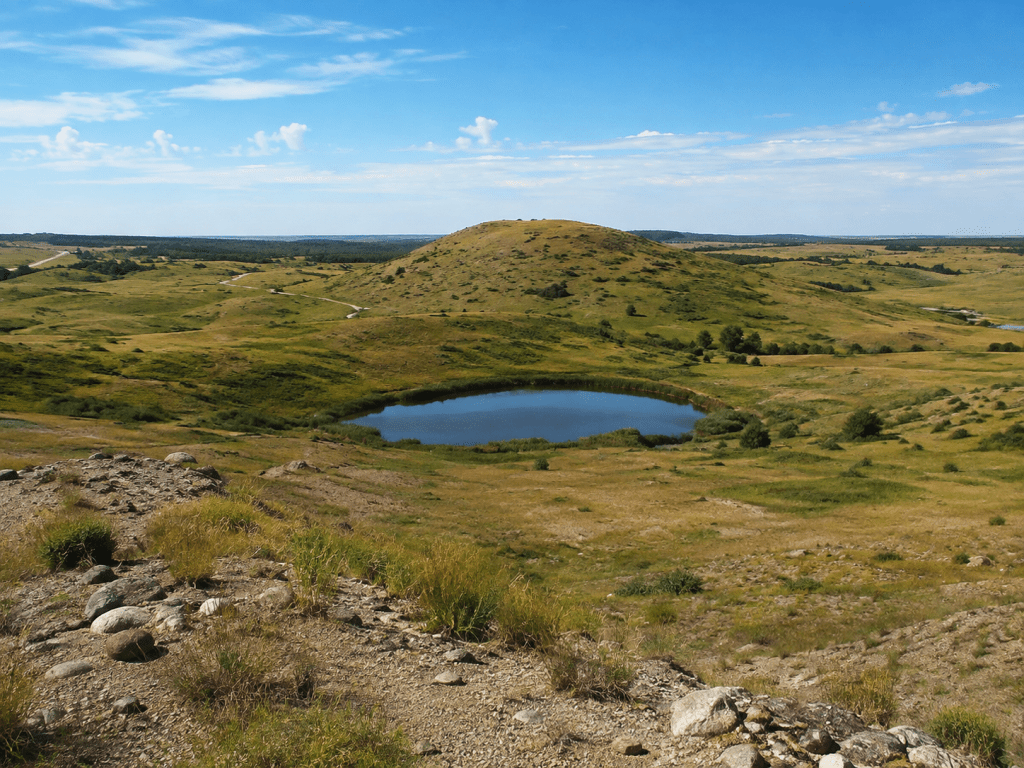
I am standing where two lobes of a giant ice sheet once met. It almost sounds like the beginning of a joke: Two lobes of an ice sheet walk into a moraine…
Some research leads me to believe that this ice sheet may have been up to two miles thick. Meltwater poured off the sheets into a hole. The movement of the water piled sand and gravel into a hill over 200 feet tall at the bottom of the ice. The ice is gone. The hill remains.
I try to picture this scene. Today is a warm summer day. Later, I will seek out ice for my drink to cool off. Two miles of ice is rather chilly. I have had the privilege of standing near a present-day glacier. Although that glacier was not so thick as what was once in this place, it was cold. I might have an easier time picturing this in the winter.
The glacier retreated somewhere around 10,000 years ago. What does it take to remove two miles of ice?
The glacial retreat has left its mark all over this landscape. My research wraps me in words such as drumlin, kettle, esker and moraine. The weight of the ice, the pressure and movement of ice and water, have shaped the ground, leaving visible clues of its presence even now.
What did it really look like when the ice sheet was here? Did anything live here then? How long did it take the ice to retreat? What did it sound like? I picture towers of ice, waterfall roars, bone-chilling cold. Were there birds? Fish?
It sounds like when the two lobes of this ice sheet met, they left a large mound of sand, gravel and till that became the moraine I am standing on. Meltwater moved material from the top of the glacier to the ground in front of it, leaving a trail almost like a track that we can follow.
From where I stand I can see a kame. Apparently, I’m looking at a pile of debris that once collected in a depression in the ice. The glacier disappeared. The debris didn’t.
Earlier today I found the opposite: a hole instead of a hill. A kettle. Sometimes a kettle fills with water and it becomes a kettle pond or a kettle lake. Hills, holes, and ridges replace rubs, tracks and scat as I trace the glacier’s path.
Despite the heat, I shiver a little. Tracking glaciers is thirsty work and I am ready to find some tiny chunks of ice to put in a glass. Maybe tomorrow I’ll find an esker.
New to Barn Owl?