Dispatch 18
Today I’m staring at the page of a book. Something has taken control of my mind and I’ve got to pull the thread until it unravels enough to give me some peace.
I live where it’s hot. All the time. With the exception of one day, it’s been over 90° for a solid two months. Take two other days out of the equation and it stretches to three months. Even in the dead of winter it’s hot. I guess the locals think winter here is cold but for someone with as many decades as I have living north of 35°N latitude (much of it even farther north) winter here feels a lot like late spring.
I can’t say for sure but I think that’s why Antarctica has been on my mind lately. I daydream of giant icebergs and warm parkas. And being cold enough to need one.
I’m by no means the only person who has felt drawn to Antarctica. Some scholars argue that Rarotongan oral traditions describe the Polynesian voyager Hui Te Rangiora sailing into Antarctic waters centuries before Europeans arrived. The interpretation is disputed, but if it happened, it would make his crew among the earliest humans known to have ventured that far south.
The reasons for such a voyage are harder to know. Accounts connect Hui Te Rangiora’s journey with migrating whales and describe strong currents carrying his vessel farther south. Whether he actually reached Antarctic waters is still debated. But Polynesian navigators were already crossing enormous stretches of the Pacific using knowledge of stars, winds, currents and the natural world. That makes the possibility difficult for me to dismiss outright.
It took a while longer for Europeans to sail Antarctic waters. Captain James Cook crossed the Antarctic Circle in 1773 while searching for the mysterious Southern Continent. He had already been sent into the Pacific with secret orders to search for Terra Australis Incognita. Apparently, he didn’t go far enough the first time, so Britain sent him back.
And then the stories start piling up. Sealers head south looking for animals already hunted nearly out of existence farther north. Explorers race to be the first to set foot on land, spend a winter there, reach the South Pole, fly over it. One person survives something completely insane and apparently thinks, Well, I should probably go back.
And here’s where I get hooked. The story of Antarctica reads like an old-school swashbuckler story. The twists and turns leave me on the edge of my seat: The actual destination of Hui Te Rangiora’s fascinating voyage is disputed, Captain Cook is sent to find a continent no one is even sure exists, tales of explorers barely making it back to the ship alive, making it back to the ship only to find out it has already left, unbelievable feats to find rescue for those left behind.
And I quickly become familiar with the phrase “the ship got stuck in the ice.”
I can barely put this story down.
But it gets so much more interesting. Some people return again and again, despite the harrowing experiences they have there. Some eventually perish there despite having survived previous visits. What is it about this place?
I’ll leave you with this thought from Antarctic explorer Jean-Baptiste Charcot:
Why then do we feel this strange attraction for these polar regions, a feeling so powerful and lasting, that when we return home we forget the mental and physical hardships, and want nothing more than to return to them? Why are we so susceptible to the charm of these landscapes when they are so empty and terrifying? Is it the thrill of the unknown, the exhilaration of the struggle and effort to get there and survive, the pride of doing something that others don’t, the sweetness of being far from the pettiness and meanness? A little of all of that, but something more, too.
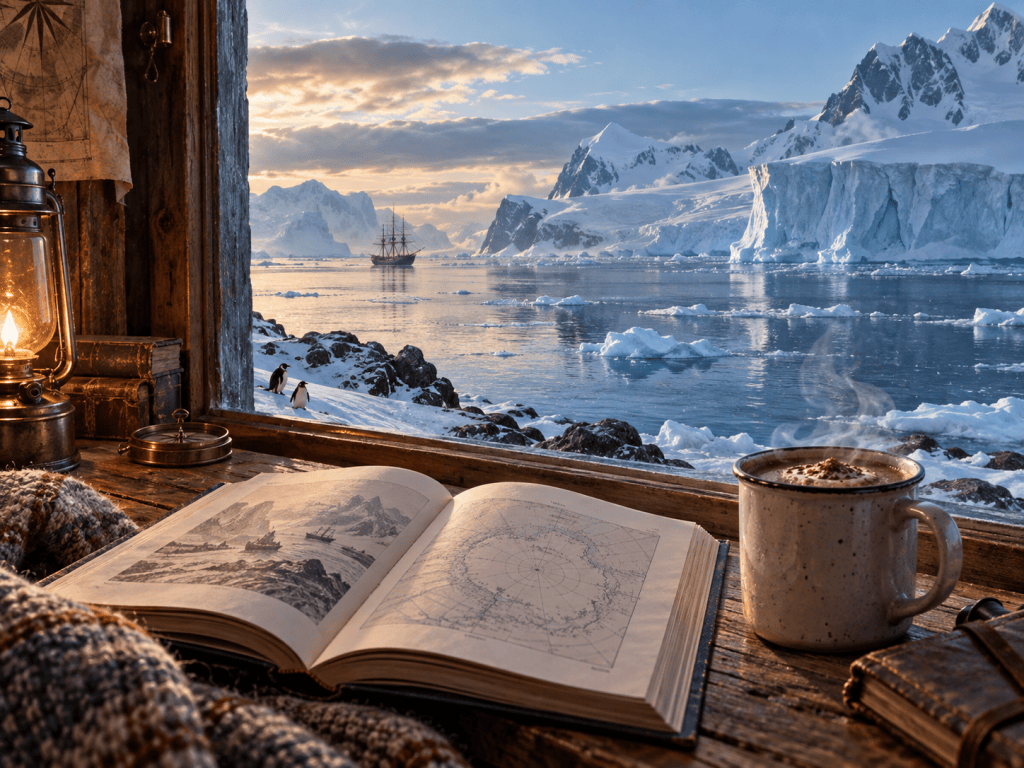
Before you go, can you hand me the book on top of that stack over there? I’m going to hunker down with a mug of hot chocolate and see where the next plot twist leads.
New to Barn Owl?